The 1st International Matcha Congress in Tokyo draws strong participation
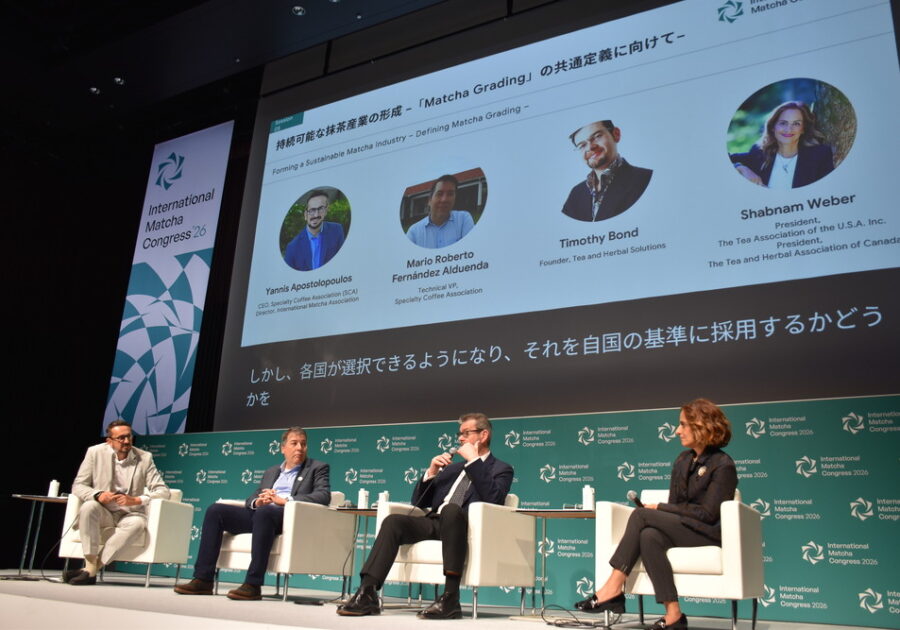
Image credit: Yumi Nakatsugawa
The International Matcha Association (IMA) hosted the first International Matcha Congress (IMC) on 12 November in Tokyo, Japan, and attendance reached nearly 1200 participants from 27 countries and regions. The strong participation seemed to be the reflection of the sudden surge in the global matcha market since late 2024, which is causing various challenges.
The IMA was formed on 22 April 2026, and no one could have predicted that the first IMC would draw so much attention internationally within half a year. The current matcha boom is creating a serious imbalance in supply and demand, price hikes, along with the complicated issues of definition and grading of matcha.
The one-day congress consisted of five of 45-minute sessions, featuring a total of 23 speakers and moderators. Sessions included: ‘The current state of matcha and industry challenges’, ‘The future of matcha from the café industry perspective’, ‘The multi-dimensional value of matcha’, ‘Market development and ecosystem design’, and ‘Forming a sustainable matcha industry’.
These days, matcha is consumed and enjoyed in numerous ways, arranged and designed into unprecedented, creative, colourful drinks, and the matcha latte has already become a staple in cafés worldwide. Such matcha beverages would not have been imagined in the traditional Japanese tea ceremony, where the ways of making and drinking matcha are strictly defined. Additionally, matcha-flavoured sweets are increasingly gaining popularity.
Some speakers pointed out that social networking services have played an important role in matcha’s rapid penetration into the world market. In addition, the antioxidant properties of matcha are highly regarded and welcomed among health-conscious consumers. Furthermore, now matcha production is spreading to China, South Korea, Vietnam, Thailand, India, Sri Lanka, the USA, Kenya and possibly in some other African countries. In those new matcha-producing regions, any innovative methods of manufacturing matcha or similar powdered green teas could be invented. Younger or local consumers might prefer the ‘new matchas’, even if Japanese traditional tea-ceremony masters would not highly evaluate them.
During the event, an experimental matcha cupping was prepared, and 17 samples were offered for tasting: 12 from Japan, four from China, and one from South Korea. Participants tried to give scores of each sample into the IMA’s specialty matcha cupping form.
Ryo Iwamoto, representative director of the IMA, emphasised that the current challenges and issues in the global matcha market cannot be solved by Japan alone. It is essential to share information and exchange opinions with everyone in the matcha industry.
The IMA plans to organise the second International Matcha Congress on 1 November in 2027, in a bigger conference hall near Tokyo Station, and expects 3000 participants from more countries. They also hope the third IMC would be held somewhere outside Japan.
Yumi Nakatsugawa has been working as a freelance writer specialising in food and restaurant management. While freelancing, she developed a love of black tea as well as tea-producing countries and tea people. Based in Japan, Yumi may be reached at: [email protected].
Topics
International Matcha Congress matcha
PeopleOrganisationsInternational Matcha Association
Regions